
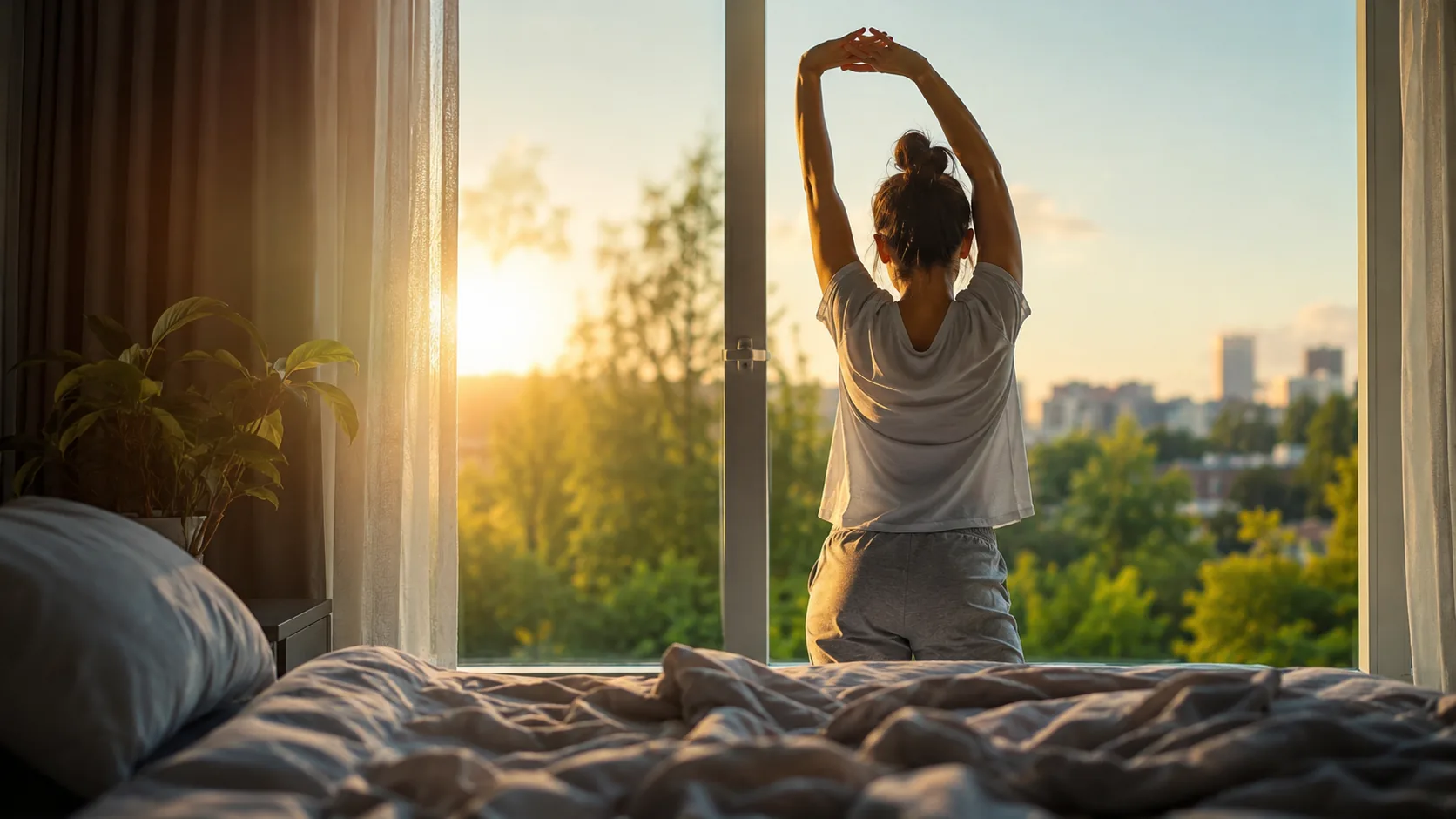
Exercise sleep: 31 RCTs show that movement cures insomnia without pills.
The connection between exercise, sleep, and well-being has received fresh and compelling confirmation. A network meta-analysis of 31 randomised trials involving 1420 sedentary adults with insomnia showed that physical exercise significantly improves sleep. The effect is substantial, and crucially, it doesn't require sleeping pills. Below is what the data revealed, what type of exercise works, who it's best suited for, and how much is needed.
What did the new meta-analysis show about exercise and sleep?
Researchers from Tsinghua University constructed a network meta-analysis of 31 RCTs (n=1420). They compared six types of exercise: aerobic, strength, HIIT, mind-body practices, endurance training, and combined programmes.
The overall effect size for the «exercise sleep» intervention is large. The total sleep quality score improved by a Hedges’ g of 1.00 (95% CI 0.59–1.41). On the effect size scale, this is not merely ‘slightly better’, but a substantial shift.
An important detail in the design. All participants were sedentary adults with diagnosed insomnia. That is, we are not talking about athletes, but specifically about those for whom sleep is difficult. The analysis was carried out in Stata 17 using a random-effects model, and the quality of the studies was assessed using the Jadad scale.
The distinct value of a network approach is that it compares modalities with each other, rather than just «exercises against nothing.» This provides a practical map: which tool is suitable for which sleep parameter.
Why does movement affect sleep?
The mechanism is not simply «tired — fell asleep». Physical exertion affects sleep through several pathways simultaneously.
The first is thermoregulation. Daytime activity raises body temperature, and its subsequent evening drop aids sleep. This fluctuation works as a natural sleep signal.
The second is hormones and neurotransmitters. Regular movement lowers cortisol and anxiety levels, affects serotonin pathways, and normalises the cardiovascular system. Less background anxiety means fewer night-time awakenings.
The third is the circadian rhythm. Regular activity synchronises the internal clock. We covered the connection between movement and the circadian cycle separately in the material about Diurnal rhythm and physical activity. A regular rhythm means falling asleep more easily and having more stable sleep during the night.
For the exercise-sleep connection, it is important that these pathways complement each other. Therefore, the effect is more sustainable than from any individual «life hack». No tracker or supplement acts immediately on thermoregulation, hormones, and circadian rhythm – but regular movement does.
There is also an indirect way. Daytime activity reduces daytime sleepiness and «sleep debt,» making it easier for the body to enter rest mode in the evening. Less napping during the day means deeper sleep at night.
What type of exercise works best for sleep
Network analysis revealed a picture of «different modalities – different benefits». This is useful because it allows one to choose a movement for a specific complaint.
Extended training showed the widest effect. It improved five parameters at once: overall score, sleep efficiency, duration, time awake after falling asleep, and subjective quality.
Aerobic exercise improved sleep efficiency, duration, and quality. Mixed and mind-body programmes – yoga, qigong, tai chi – helped with sleep efficiency and duration. Strength and HIIT also made the list, but there's less evidence for them so far.
A separate meta-analysis of 27 RCTs (2,142 participants) added a practical nuance. Pilates, yoga and traditional Chinese practices yielded the strongest results for exercise-induced sleep. Pilates topped the rankings with a SUCRA score of 95.3%. The conclusion is simple: gentle practices are just as effective as intense ones when it comes specifically to sleep.
Which exact sleep parameters are changing
The overall score is a handy summary, but it's useful to know what exactly movement impacts. Sleep is described by several separate metrics, and they react differently.
Sleep efficiency (SE) is the proportion of time in bed that a person actually sleeps. It has been improved by both prolonged training and aerobic and mixed programmes. It is one of the most movement-sensitive parameters.
Total Sleep Time (TST) is the total amount of sleep in a night. The same modalities responded here: longer training over weeks adds minutes to night sleep.
Wake After Sleep Onset (WASO) is the amount of time a person is awake after falling asleep. It has been reduced by prolonged training. For those who wake up at three AM and cannot get back to sleep, this is the most important metric.
For the exercise-sleep connection, the conclusion is simple. Movement doesn't affect «sleep in general», but specific links: falling asleep faster, fewer night-time awakenings, and a higher proportion of actual sleep in bed.
Exercise sleep is most suitable for individuals who struggle with sleep due to an overactive mind or physical restlessness. It typically involves moderate-intensity exercise to help calm the body and mind, leading to better sleep. The amount of movement needed varies depending on individual fitness levels and goals. Generally, aiming for at least 150 minutes of moderate-intensity aerobic activity or 75 minutes of vigorous-intensity aerobic activity per week is recommended. This can be broken down into shorter sessions throughout the week. It's also advisable to incorporate strength training exercises at least twice a week. However, for "exercise sleep," the focus is more on the timing and type of exercise rather than strict adherence to weekly recommendations. Gentle to moderate activities like walking, yoga, swimming, or cycling a few hours before bedtime can be beneficial. The key is to avoid very intense workouts close to sleep, as they can have the opposite effect and disrupt sleep patterns. Listening to your body and finding what works best is crucial.
Subgroup analyses showed where the effect was most pronounced. This is practically useful information for choosing the first step.
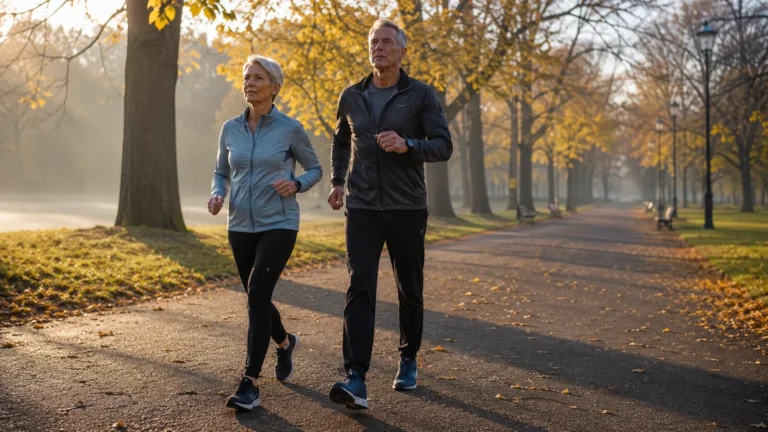
The largest shift was observed in the 45–59 age group (Hedges g 1.97). People who were overweight benefited significantly. The effect was also confirmed separately in female-only samples (Hedges g 0.95). This does not mean that exercise will not help others. For middle-aged people with sleep complaints, exercise is simply a particularly appropriate first tool.
Regarding the scope, the data converges on moderate, realistic values. No extremism is needed.
In the meta-analysis of exercise and sleep, programmes lasting 8–16 weeks yielded the most consistent effects. This isn't about «one run before bed», but several months of regularity. Sleep responds to habit, not to an isolated episode.
Dosage analysis describes a J-shaped curve relationship. The minimum effective dose is about 195 MET-minutes per week. The optimum is approximately 440 MET-minutes per week. In practical terms, this translates to roughly 150 minutes of moderate activity – the same WHO baseline.
Important: more is not always better. The curve flattens out, and further hours do not yield a proportional gain. A separate meta-analysis of regular exercise for at least two months confirmed consistent improvements on the PSQI and ISI scales. The effect lasts as long as the habit persists.
Honest limits of this data
This is a strong body of evidence, but not a reason to switch off critical thinking.
Network analysis authors directly advise caution. There is little research for some modalities. The «0-8 weeks» subgroup gave an anomalously high score due to a wide confidence interval – this is statistical noise, not a miracle.
The data pertains to individuals with insomnia, not «healthy sleep for optimisation.» This is also a limitation of application. The sober conclusion is different: for an adult with a sedentary lifestyle who sleeps poorly, movement is an evidence-based, safe, and cheap alternative of first choice. Not a replacement for a doctor where there is a clinical disorder, but a sensible starting point.
What to do with this in practice
If sleep is difficult to come by, the exercise sleep bundle offers a simple plan without pills.
The benchmark is around 150 minutes of moderate activity per week, spread over several days. The type can be chosen to suit you: aerobic for sleep duration, Pilates or yoga if intensive exercise is off-putting. The timeframe is 8–16 weeks of regularity, not just one evening.
It's also worth remembering that sleep isn't just sensitive to movement. We wrote about other factors, such as the microbiome, in the post about Probiotics and sleep. Movement and basic sleep hygiene work better together than alone.
Regarding training times, the data does not provide a strict «mornings only» rule. Intense exertion late in the evening can indeed disrupt sleep for some people, so if an evening session impairs sleep, it should be moved to earlier in the day. However, for most people, the key is not the hour, but regularity over weeks. Consistent three to four sessions at a convenient time are better than an ideal schedule that you don't stick to.
Exercise is a proven, safe, and free sedative with sustained action.
Sources
- Guo J, Tang J, Jiang J, et al. The impact of different types of exercise on sleep in sedentary populations: a systematic review and network meta-analysis. PeerJ. 2026;14:e21037. DOI: 10.7717/peerj.21037
- Xie W, Lu D, Liu S, Li J, Li R. The optimal exercise intervention for sleep quality in adults: a systematic review and network meta-analysis. Preventive Medicine. 2024;183:107955. DOI: 10.1016/j.ypmed.2024.107955
- Xie Y, Liu S, Chen XJ, et al. Effects of exercise on sleep quality and insomnia in adults: a systematic review and meta-analysis of randomised controlled trials. Frontiers in Psychiatry. 2021;12:664499. DOI: 10.3389/fpsyt.2021.664499



 Українська
  English (UK)